空手
What is Karate
The Origins of Karate
The origins of Karate date back to the 5th century AD. Chinese monks developed the martial art for self-defence. From China, Karate spread further and found great popularity especially on the Japanese island of Okinawa. There, the form of Karate as we know it today developed.
On Okinawa, fighting was done without weapons, as weapon ownership was forbidden for the general population. This weaponlessness is still reflected today in the syllables “kara” and “te”, which mean “empty hand”.
The elementary school teacher Gichin Funakoshi significantly increased the popularity of Karate. After an impressive demonstration of his skills, Karate was introduced as a compulsory subject in Okinawa’s schools. After World War II, Karate finally found its way around the world.
The Styles
Not all Karate is the same. Over time, various styles have developed. The four largest today are: Shotokan, Goju-Ryu, Shito-Ryu and Wado-Ryu. In our dojo, we practise Shotokan Karate. The styles differ in their techniques and fighting methods.

Shotokan

Goju-Ryu
Shito-Ryu
Wado-Ryu
基本・組手・型
The three pillars
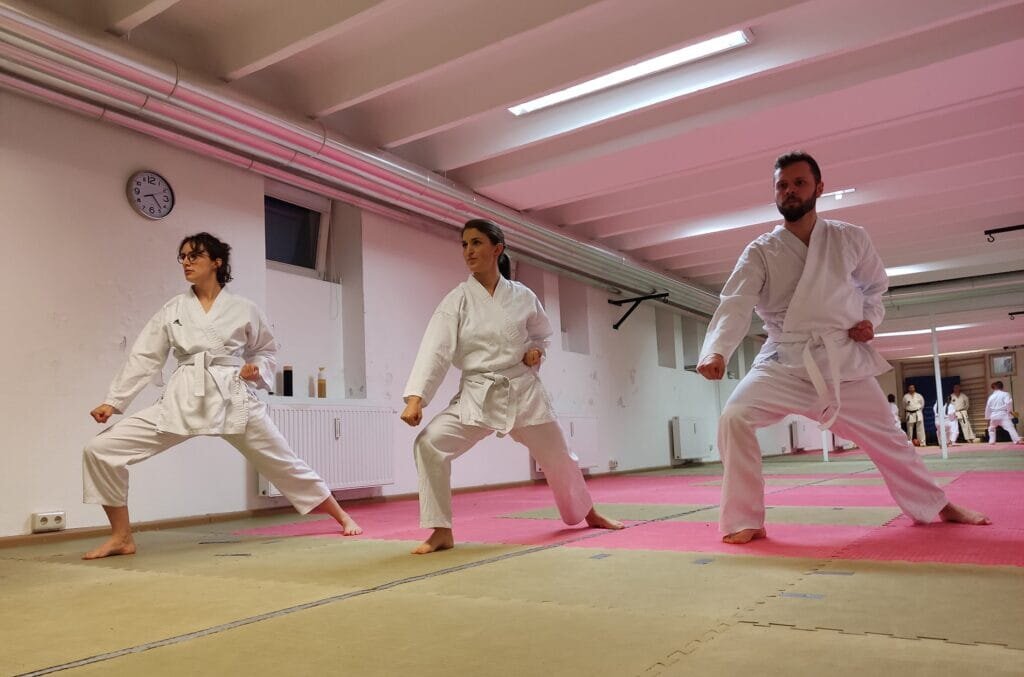
Kihon
Fundamentals — Basic stances, techniques and movement sequences are practiced and perfected without a partner.
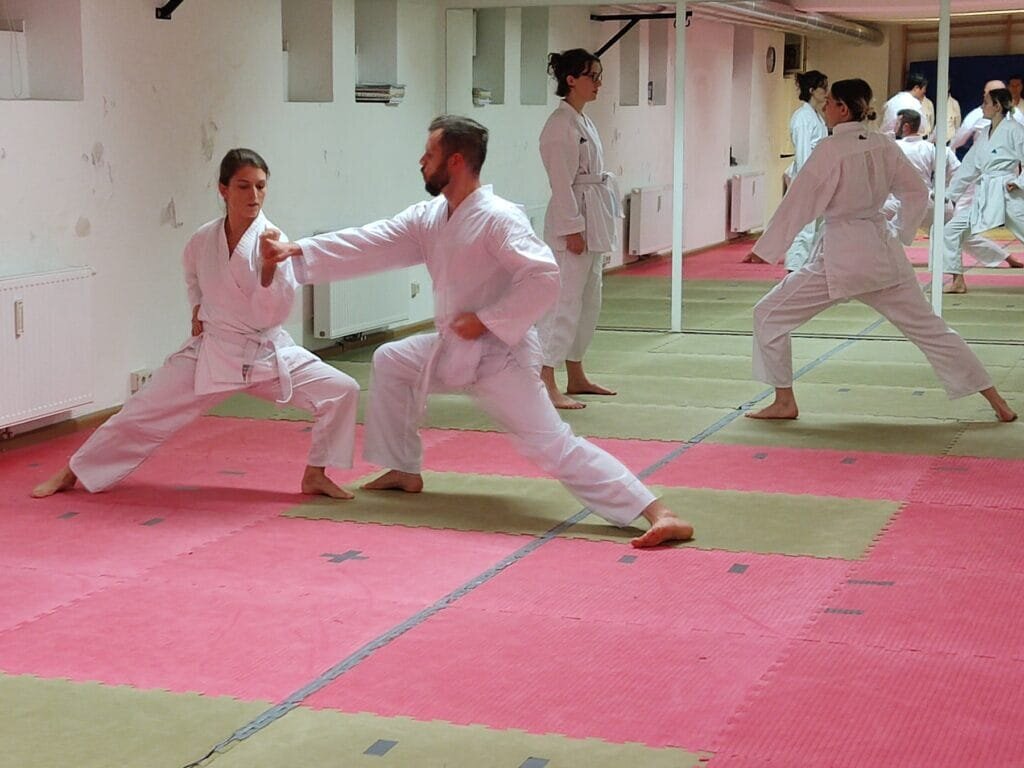
Kumite
Sparring — Two karatekas practice techniques together, from partner exercises to free fighting.
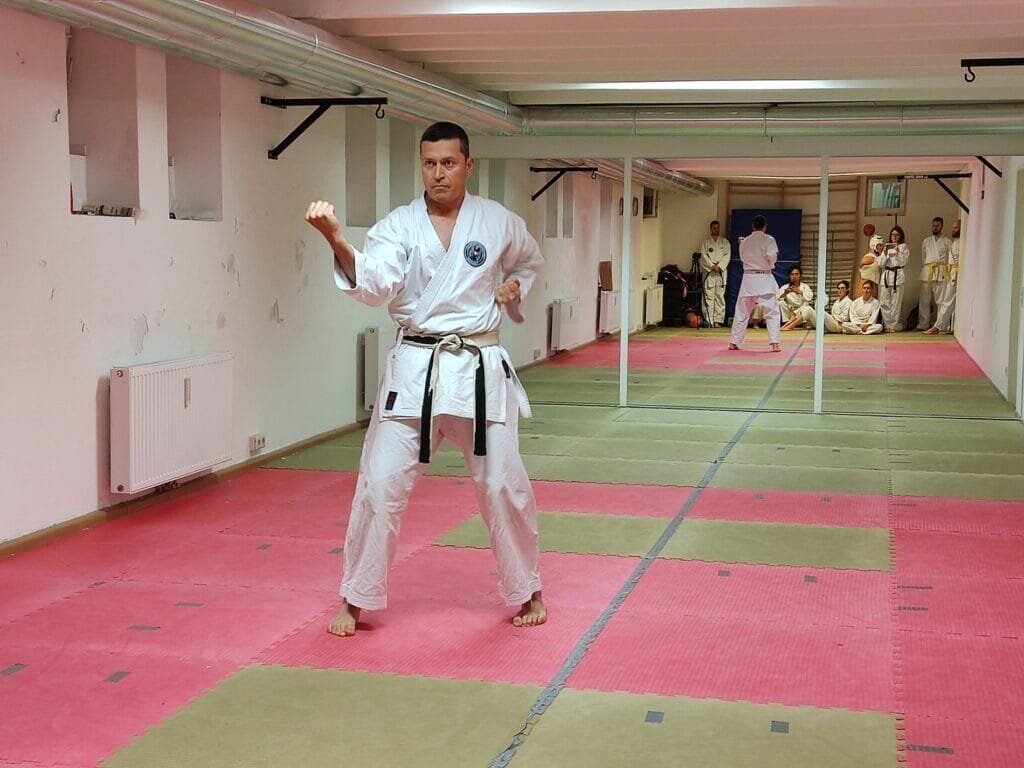
Kata
Form — A fixed sequence of techniques that pass down centuries-old knowledge.
Kihon (Basics)
Here, karateka learn basic stances, techniques and movement sequences. Individual techniques are practised repeatedly without a partner. Through regular Kihon training, the details of each movement should be perfected as much as possible.
Kumite (Sparring)
In Kumite, two karateka practise the learned techniques together. Initially, simple partner exercises with precise movement sequences help develop targeting accuracy and a sense of distance. More experienced karateka can also spar freely against each other. Strict rules ensure that partners do not injure each other. Anyone who fails to follow these rules in competition is disqualified.
Kata (Form)
This form of training consists of a sequence of predetermined techniques, similar to a choreography, performed by the karateka alone. The katas have been passed down from generation to generation, preserving centuries-old knowledge.